04
Screen Results
The final UI design spanned the full buyer journey — from onboarding through checkout — with each screen designed to meet specific product backlog requirements and user needs.
Onboarding — Splash Screen & Login
Entry point screens designed to orient users and enable secure, frictionless account access with multi-language support.
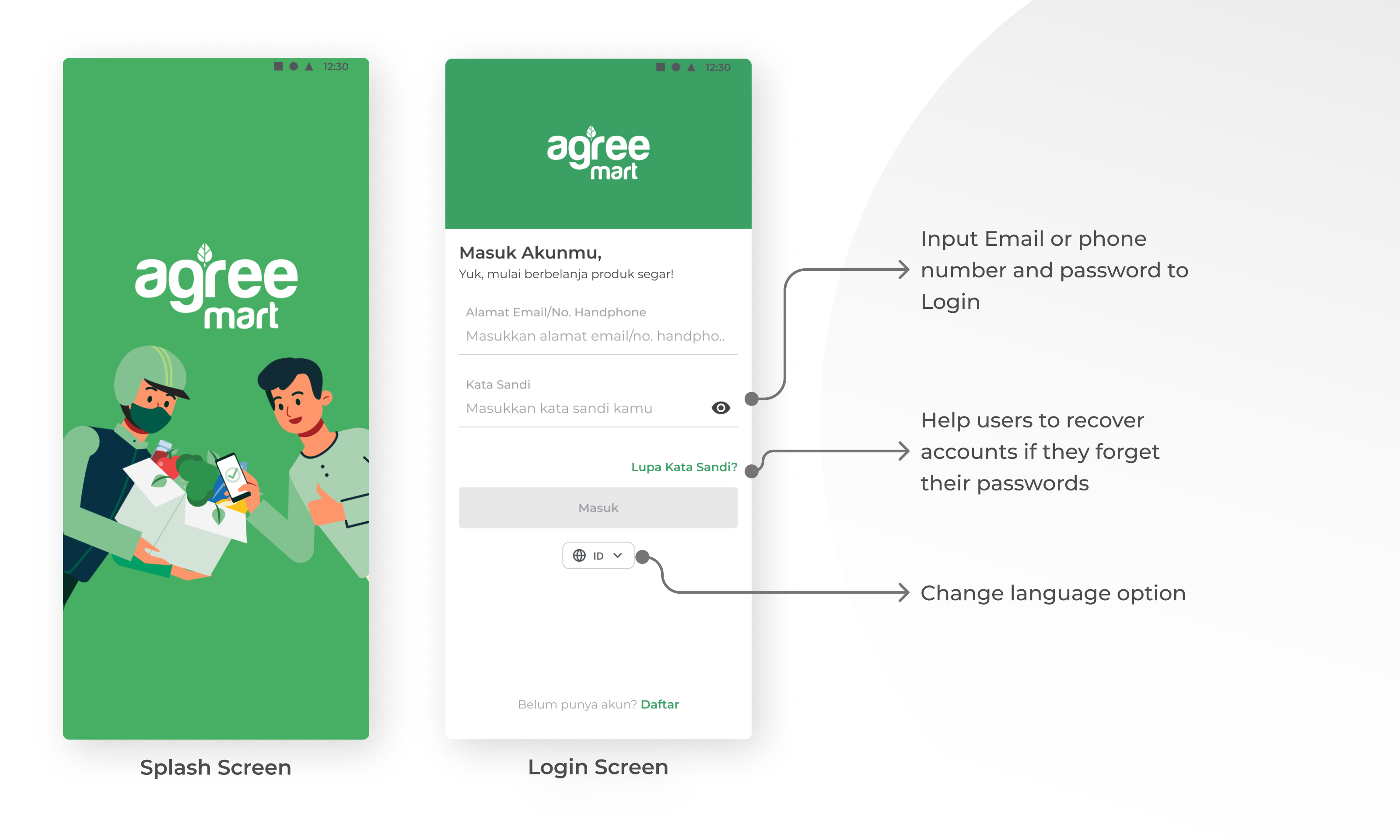
Screen 01
Login screen supports email or phone number entry, account recovery for forgotten passwords, and a language toggle — enabling access for users across different regions.
Home Screen — Discovery & Merchant Browsing
The primary destination screen designed to drive purchase intent through promotions, category navigation, and nearby merchant discovery.
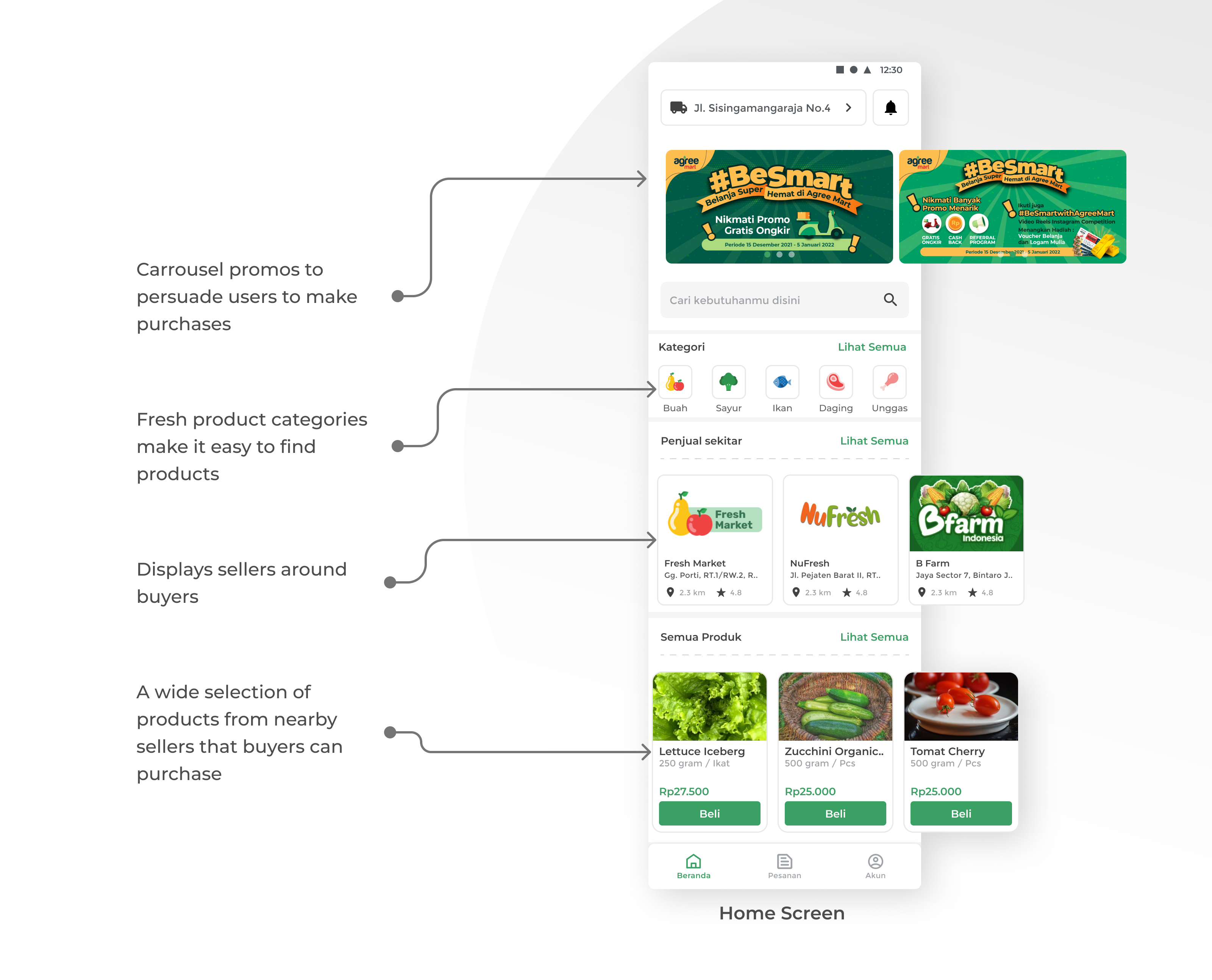
Screen 02
Carousel promotions drive purchase persuasion. Fresh product categories make navigation effortless. Nearby merchant listings with wide product selections empower buyers to make informed, local purchases.
Merchant Page
Merchant product listing with grid layout
Merchant info: rating, operating hours, distance
Product grid with price and availability
Quantity input for manual order control
Floating cart badge shows active order count
Merchant Page — Active Order
Merchant page with active order summary visible
Active order summary shown inline
Shipping capability displayed per merchant
Seamless transition to checkout without losing cart state
Checkout Page
Checkout page with delivery and payment summary
Displays buyer location, shipping method, ordered items
Gift order toggle — send order to another recipient
Notes field to clarify orders to merchant and courier
Total payment detail expandable via rincion badge
Location & Shipping Method Selection
Screens enabling buyers to configure delivery address and courier preference with full flexibility and transparency.
Choose Location — map search, pin drop, saved addresses, location history
Choose Shipping Method — courier options with price and duration
Screen 03–04
Buyers can search delivery addresses via map search or direct pin drop. Favorite locations and order history are saved for repeat convenience. Multiple shipping options — including Same Day — are displayed with delivery duration and transparent pricing.
Payment Flow — E-Wallet & Final Checkout
A complete payment experience covering method selection, e-wallet integration, and real-time payment status.
Final Checkout Page — payment method summary and bill breakdown
E-Wallet Options — LinkAja, GoPay, OVO, Dana, ShopeePay
Waiting Page — payment processing status with redirect confirmation
Screen 05–07
Payment supports e-wallet and virtual account methods with T-Money loyalty integration. E-wallet selection covers all major Indonesian platforms. A redirect confirmation and real-time waiting page communicate payment processing status clearly to buyers.